One Chair, Many Hands: A Mediterranean Form, Reinterpreted
How a single regional silhouette — the low rush-seat taverna chair — moves from a coastal workshop into the catalogues of a dozen unrelated producers.
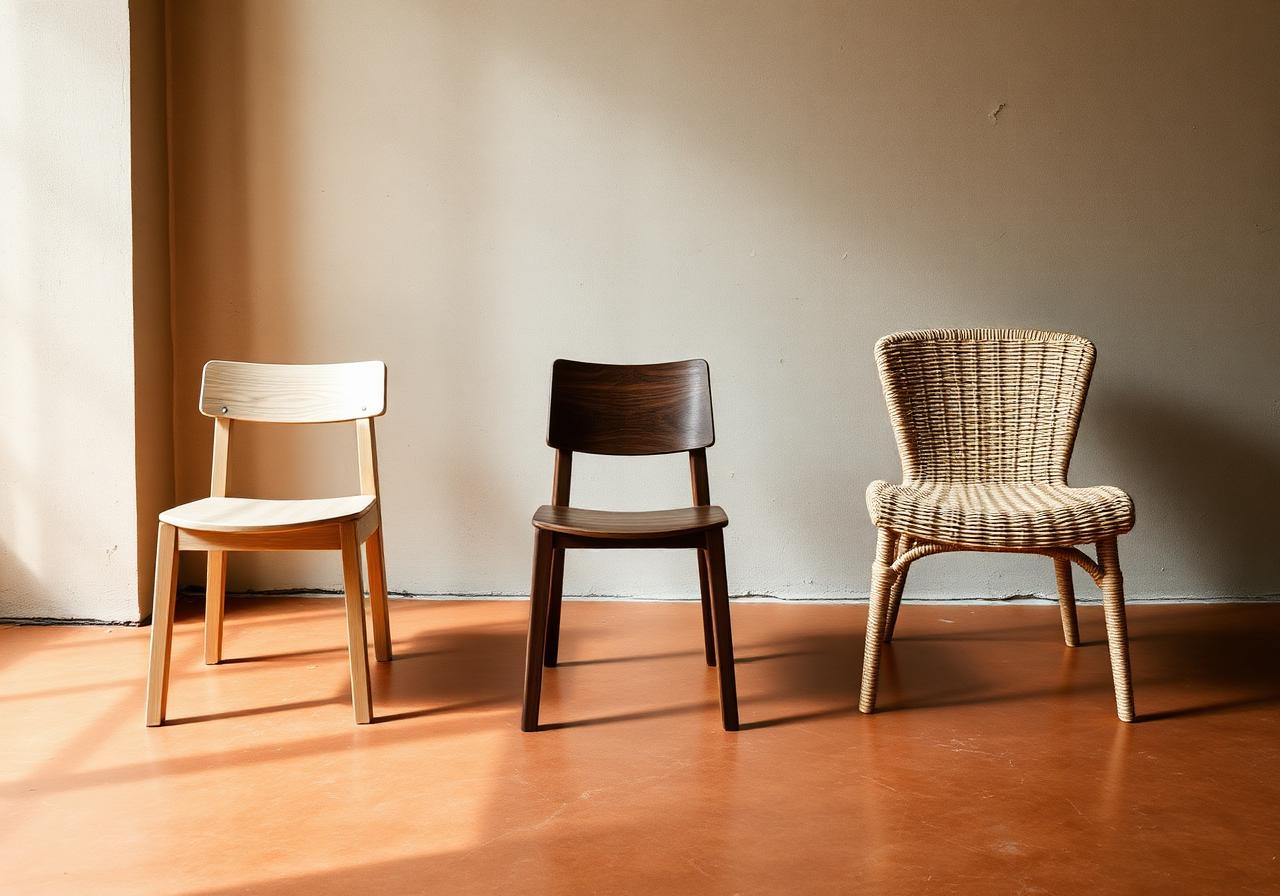
Walk into any village taverna along the eastern Mediterranean and you will recognise the chair before you sit on it: low back, turned legs, a woven rush seat softened by decades of use. It was never designed in the modern sense. It was arrived at, slowly, by hands that needed something cheap, repairable, and stackable enough for a courtyard.
What is interesting is what happens when this anonymous form leaves the village. A small Iberian workshop reads it as craft: solid beech, hand-woven seagrass, priced like a piece of furniture you are meant to inherit. A large Scandinavian producer flattens it into pale ash and a moulded plywood seat — the silhouette survives, the labour does not. A mass-market catalogue keeps only the proportions, swaps rush for stamped polypropylene, and ships it from a warehouse in three colours.
None of these objects is dishonest. Each one is a translation, and like all translations it carries opinions about the original. The workshop translates the chair as heritage. The Scandinavian house translates it as type. The catalogue translates it as access.
The conversation, then, is not which version is correct. It is what each producer chose to keep and what they decided you would not miss.
“The best buildings teach you how to be in a room.”
We will leave the last word to the reader. The questions below are not rhetorical. They are an invitation.
Before you comment, consider:
- 01
When a vernacular form is reinterpreted by a global producer, who owns the original?
- 02
Is a faithful, expensive reproduction more honest than a cheap, widely available one?
- 03
What is the difference between an homage, a translation, and a copy?
Join the discussion
This is a journal, not a comments section. Share a building you love, a tradition from your region, or a memory a room once gave you. All voices, all cultures, all perspectives are welcome here.
- Anya PetrovTbilisi, Georgia3 days ago
Read this twice. The bit about the doorway feeling like a welcome — my grandmother's house in Sighnaghi has exactly that, a low stone arch you have to dip your head under, and you arrive in the courtyard already softened. I don't think she would have called it architecture. But it is.
- Joaquín RiberaMexico City2 days ago
Writing this from a rooftop in Coyoacán. The neighbour's bougainvillea is doing more for the street than anything the developers put up last year. I think you're right that the older traditions were generous, but I'd push back gently — generosity is also a choice we have to keep making now, and most of the new towers here aren't choosing it.
- Mei TanakaKyotoyesterday
There's a word in carpentry here, kigoroshi, for crushing wood fibres so the joint swells back tight over time. I thought of it reading your paragraph on continuity. The good buildings are the ones that include the future in the calculation.
- Amadou DialloDakaryesterday
If you ever get the chance to be in Djenné for the replastering of the Great Mosque, go. The whole town climbs the walls. Children carry water. Old men direct from the shade. The building is never finished, which is the entire point. Thank you for writing this with care.
From the same shelf

How Architecture Began: From Shelter to Symbol
Long before drawings, before the word architect existed, people were already building. A short history of how shelter became symbol — across every continent.
Imhotep: The First Architect We Know by Name
Physician, advisor, poet, builder. The life of the man behind the Step Pyramid — and what his career tells us about where architecture comes from.